Collection: Gabion Baskets


S355J0 structural steel beams (RSJs) from 127x76 UB13 to 254x146 UB43, cut to your required length. Mill finish or red oxide primer. Delivered on a flatbed lorry, 5-10 working days to mainland UK.

No products found
Use fewer filters or remove all

Need a beam size not listed?

We can source any standard Universal Beam or Universal Column section to BS EN 10365 in S355J0 grade, cut to your required length.

Email Us for a Quote

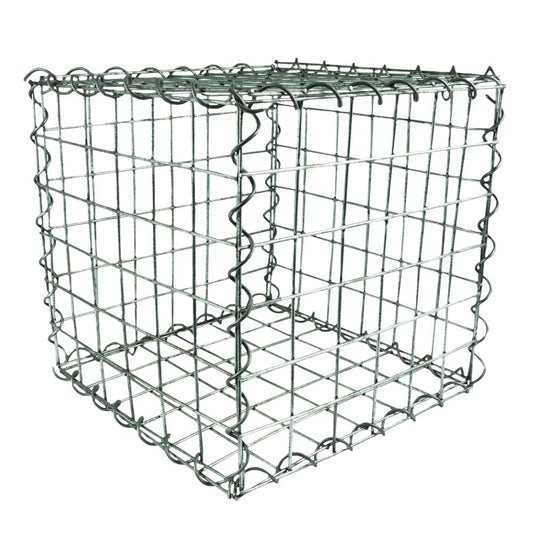
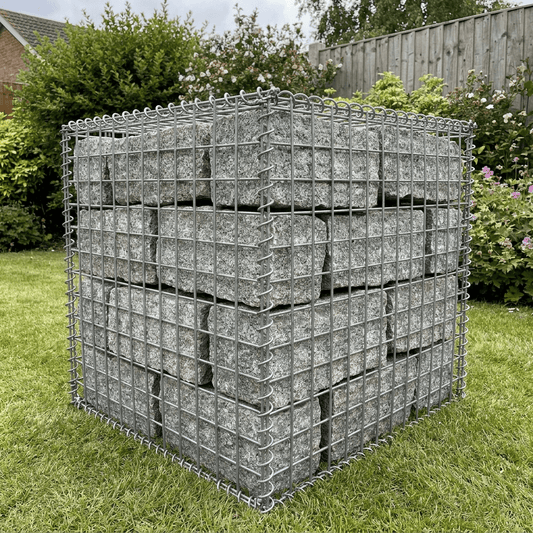
Galvanised welded wire gabion baskets and cages for building gabion walls, retaining walls, garden features, boundary fencing and structural landscaping. Each gabion cage is supplied flat-packed with spiral connectors and internal bracing panels, ready to assemble and fill with stone, rock, rubble or recycled aggregate on site.

What Are Gabions

A gabion is a wire mesh cage filled with stone or rock to form a heavy, free-draining, structural mass. Gabions have been used in civil engineering for centuries — originally for military fortifications, now widely used for retaining walls, erosion control, flood defences, boundary walls, noise barriers and decorative garden features. The word gabion comes from the Italian gabbione, meaning big cage.

Gabion Basket Sizes

Standard gabion cage sizes are based on modules of 0.5m and 1.0m. Common sizes for garden and domestic use include 0.5 x 0.5 x 0.5m, 1.0 x 0.5 x 0.5m, 1.0 x 1.0 x 0.5m and 1.0 x 1.0 x 1.0m. Larger cages up to 2.0 x 1.0 x 1.0m and 3.0 x 1.0 x 1.0m are used for retaining walls, civil engineering and commercial landscaping. Small gabion baskets (0.5m cube) suit planters, benches, pillars and garden features where a full-height wall is not needed.

Gabion Retaining Walls

Gabion retaining walls hold back earth on sloped sites, terraced gardens, driveways and embankments. The filled cages are heavy enough to resist the lateral earth pressure without mortar or foundations in many domestic applications. For walls over 1m high or where the wall retains a surcharge load (driveway, building, traffic), a structural engineer should design the wall including any stepped or battered (angled) profile needed for stability. Gabion retaining walls are free-draining — water passes straight through the stone fill, eliminating the hydrostatic pressure that causes solid retaining walls to fail.

Gabion Garden Walls and Features

Gabion walls in gardens serve as boundary walls, seating walls, raised beds, planters, water features, fire pit surrounds, outdoor kitchen bases and decorative screens. A gabion bench is made by capping a low gabion wall (typically 0.5m high) with a timber, stone or composite seat. Gabion planters use a cage filled with stone on the outside and a lined planting pocket in the centre. The industrial texture of stone-filled wire mesh contrasts well with soft planting, timber and natural materials in contemporary garden design.

Gabion Fencing

Gabion fencing uses narrow cages (typically 0.3m or 0.5m deep) stacked to fence height as a solid, heavy boundary that provides privacy, wind protection and noise reduction. A gabion fence is more durable than timber, does not rot or blow over, and requires zero maintenance. Gabion fence panels can be combined with timber sleepers, steel posts or planting to create mixed-material boundary designs. For security fencing, the weight and mass of a filled gabion wall makes it extremely difficult to move or breach.

How to Fill Gabion Baskets

Assemble the cage on a level base using the spiral connectors to join the panels. If internal bracing panels are supplied, fit them at the specified intervals to prevent the cage from bowing outward under the weight of the fill. Hand-place the face stones (the visible outer layer) neatly with flat faces outward, then fill the core with rubble, aggregate or recycled stone. A well-placed face hides the rougher core fill behind it. Compact the fill in 300mm layers to minimise settlement after construction.

Gabion Stones and Fill Material

The fill stone must be larger than the mesh aperture to prevent it falling through the wire. Common fill materials include angular rock, granite, limestone, basalt, flint, slate, sandstone, recycled concrete and crushed brick. The stone size, colour and texture determine the finished appearance of the gabion wall. Angular stone locks together better than rounded stone, giving a more stable fill. Decorative stone (such as white limestone or blue slate) is used for feature walls and planters where appearance matters.

Welded vs Woven Gabion Mesh

Welded gabion baskets use wire welded at every intersection to form a rigid, flat panel. Woven (or twisted) gabion mesh is a traditional hexagonal weave similar to chicken wire but in heavier gauge. Welded mesh gives a cleaner, more precise appearance, holds its shape better, and is easier to assemble — it is the standard choice for garden walls, landscaping and domestic retaining walls. Woven mesh is more commonly used in civil engineering and erosion control where flexibility and drape over uneven ground are needed.

Gabion Wire Specification

All gabion baskets are manufactured from galvanised or galfan-coated steel wire. Galfan (95% zinc, 5% aluminium alloy) gives significantly longer corrosion life than standard galvanising — typically 60-80+ years in a normal UK environment. Wire diameters range from 3mm for small decorative cages to 4.5mm or 5mm for structural retaining walls. The mesh aperture (hole size) is commonly 75 x 75mm or 100 x 100mm depending on the intended fill stone size.

Planning Permission for Gabion Walls

In most cases, a gabion garden wall under 2m high on your own boundary does not require planning permission under permitted development rights. Walls over 2m, walls adjacent to a highway, walls in conservation areas and retaining walls that affect neighbouring properties may require planning approval. Check with your local planning authority before starting work. Building Regulations approval may also be needed for retaining walls over 1.2m or walls supporting a surcharge load.