
Collection: Steel & Aluminium Angle

-
Mild Steel Equal Angle Iron – S275, 20x20mm to 150x150mm, 6m Lengths & Cut to Size, Angle Bar for Brackets, Frames, Lintels & Fabrication
Regular price From £35.99 GBPRegular priceUnit price £6.00/m -
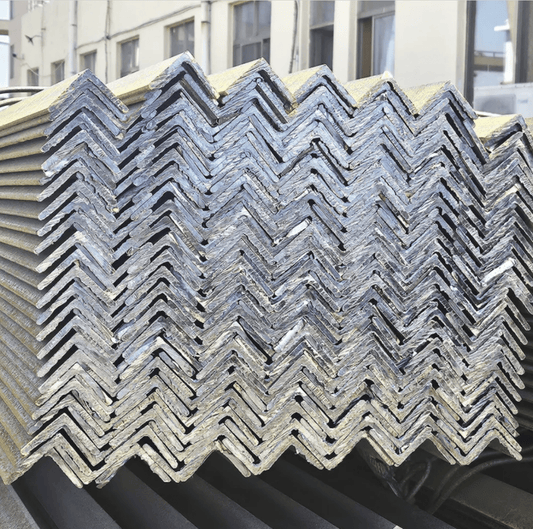
Galvanised Steel Angle – Hot-Dip Zinc Coated Equal Angle Iron, 6m Lengths & Cut to Size, for Outdoor Frames, Fencing & Agricultural Use
Regular price From £34.99 GBPRegular priceUnit price £5.83/m -
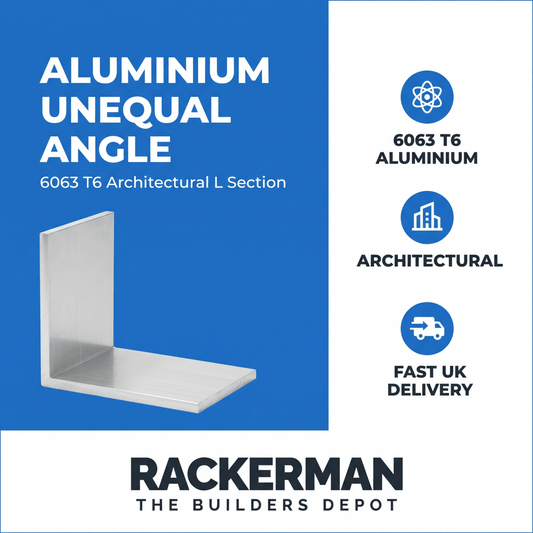
6063 Aluminium Unequal Angle – T6 Architectural L Section, 5m Lengths & Cut to Size, Aluminium Angle Bar for Edging, Frames & Fabrication
Regular price From £73.99 GBPRegular priceUnit price £14.80/m -
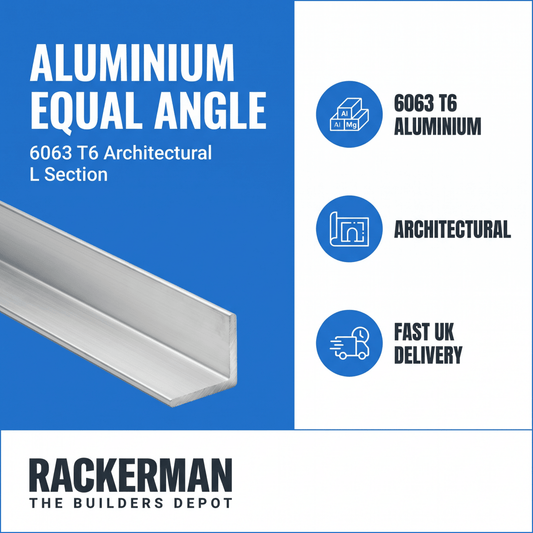
6063 Aluminium Equal Angle – T6 Architectural L Section, 5m Lengths & Cut to Size, Aluminium Angle Bar for Edging, Frames & Fabrication
Regular price From £34.99 GBPRegular priceUnit price £8.60/m -
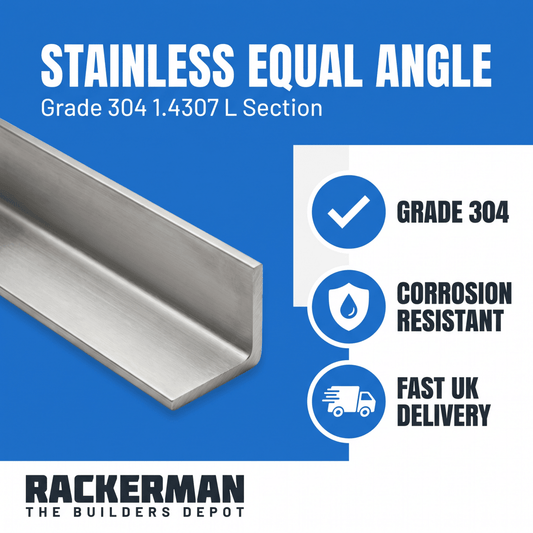
304 Stainless Steel Equal Angle – Grade 304 L Section, 6m Lengths & Cut to Size, Stainless Steel Angle for Frames, Brackets & Fabrication
Regular price From £93.99 GBPRegular priceUnit price £15.67/m -
Mild Steel Unequal Angle Iron – S275 Rolled Steel L Section, 6m Lengths & Cut to Size, Steel Angle Bar for Frames, Brackets & Fabrication
Regular price From £65.99 GBPRegular priceUnit price £11.00/m






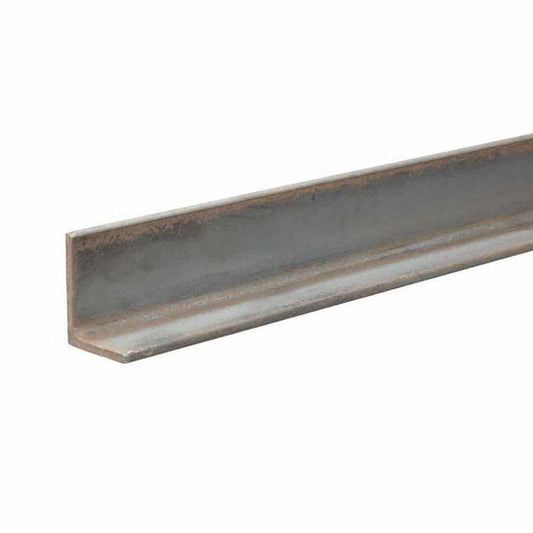
Steel angle — also known as angle iron or L-section — in mild steel, galvanised, stainless steel and aluminium, in equal and unequal profiles. Choose your material and profile below, cut to your length with fast UK delivery.
Compare angle by material


Equal vs unequal angle
Equal angle has two legs of the same width, from 20×20mm up to 150×150mm — symmetrical and ideal for frames, brackets, edging and general fabrication. Unequal angle has one longer leg, such as 40×25mm up to 150×90mm, giving greater strength about its long leg — suited to lintels, ledges and asymmetric supports. Both profiles are available here in mild steel, and equal angle across all four materials.
Sizes & thickness
Equal angle runs from 20×20mm up to 150×150mm, unequal from 40×25mm up to 150×90mm, in thicknesses from 3mm to 12mm (steel) and lighter walls in aluminium. Exact stock sizes and weights per metre are listed on each product page — every size is cut to your length with no minimum order.
Common applications
- Brackets & frames — mild steel or galvanised
- Lintels & ledges — mild steel unequal angle
- Edging & trim — aluminium
- Fencing & agricultural — galvanised
- Hygienic, marine & architectural — stainless
- General fabrication & repairs — mild steel
Shop angle by material & profile
Choose your angle: mild steel equal angle (angle iron), mild steel unequal angle, galvanised steel angle, 304 stainless steel equal angle, and 6063 aluminium equal and unequal angle. Sizes and weights: see our angle iron sizes & weights guide.
Delivery & lead time
Angle is typically delivered within 3–5 working days. Steel angle is supplied in 6m lengths and aluminium in 5m, so suitable delivery access is required and offload assistance may be needed for larger orders. For load-bearing or structural use, sizes should be confirmed by a qualified structural engineer.
Steel angle FAQs
What is steel angle?
An L-shaped section — also called angle iron — with two legs meeting at 90°, used for frames, brackets, supports, edging and general fabrication. Available in equal or unequal legs.
Equal or unequal angle — which do I need?
Equal angle (matching legs) suits symmetrical frames, brackets and trim. Unequal angle (one longer leg) is stronger on its long leg — better for lintels, ledges and asymmetric supports.
Can you cut it to size?
Yes, cut to your specified length with no minimum order.
What thickness do I need?
3mm for light brackets, edging and trim; 6–10mm for structural frames, lintels and load-bearing work.
Is galvanised better than mild steel?
Outdoors, yes — the zinc coating resists rust. Indoors, mild steel is cheaper and perfectly suitable.
Is aluminium angle strong enough?
For lightweight edging, trim and frames, yes — and it won’t rust. For heavy structural loads, use steel.